

I live near Sign Bar, a bar decorated with the salvaged signs of Austin businesses that no longer exist. While I do like this bar, it is literally a graveyard of restaurants, bars, and shops the residents of this city once frequented. When my wife and I sit outside, a wave of nostalgia washes over me as I point out bars I used to go to when I was at the University of Texas. It’s easy to remember great stories of post-work dinners from when I worked downtown. Real estate for bars and restaurants (in any city) can feel like a revolving door. Restaurant closures usually get a mix of people saying they loved it or the other side of the coin: people saying they had been predicting its closure for years. Regardless, most longtime Austin residents feel a certain pain to see their favorite spots close.
Fricano’s Deli. Lammes Candies. Dart Bowl. Shady Grove. Milto’s. Trudy’s (I don’t care what you say, I loved it). Outer Heaven. Threadgill’s.
These were just some of my favorites; the places I enjoyed. Any Austinite will defend a particular shuttered business and tell you how it was the biggest loss Austin has seen. The loss of one shop in particular has been a painful loss for me lately: SoCo Homebrew on South Congress shuttered in June 2026.
A brewing interest
Cooking has been my primary hobby over the last five years and has ranged across barbecue, braising, baking, and more. Most of my friends know, though, that at any given time, I am fermenting something. Kombucha, ginger beer, wine, lacto-fermented vegetables or fruits, and of course the classic answer: beer. My first attempt at brewing a batch of beer was June of 2025. My best friend Wynn gave me his old brewing equipment and it was the perfect way to start… I thought. I quickly realized this was pretty complicated. I did not know how to work any of this stuff. I also had no idea: Where the hell do you even get grain and hops?
A quick search showed me I was not too far from SoCo Homebrew. I stopped in on a Saturday morning with a recipe I found online. At first I tried to act like I knew what I was talking about but ended up just telling him the shopping list of ingredients I had never heard of. The man working there, Mike, knew exactly what everything was and for anything they did not carry, he knew the best substitute. It was amazing. The beer I ended up brewing? I called it Jü Brü. It was decent; it was drinkable. I considered that a victory. I had a bunch of friends over and they helped me drink it.
I ended up going back to SoCo multiple times that summer to try out other fermentation projects. I bought a kombucha SCOBY (which I still have today), kefir, koji (for sake), and honey for mead. They supplied not only the ingredients but also my bottles and caps. The store is a treasure trove for fermenters. This past May, I went back to try my hand at a second batch of beer. It was early enough that my beer would be ready by July 4 but late enough that peaches were in season. Armed with a grocery list and confidence, I marched down to SoCo and Mike was there again. He helped me find every item on the list and milled the grain for me as well. This recipe was for a Peach Wheat Ale (Jü Brü 2). The beer was freaking great. Everyone who tried it was pleasantly surprised. It went so well that I told my wife I wanted to make two to three batches of beer per year (all seasonal beers, of course).
Brewing beer usually takes a few weeks from grain to glass. When I brew, I have to think: when will I have a few hours to take over the kitchen to brew and then be home for a few hours in a few weeks to bottle it up? I did the math and thought it would be perfect for a Belgian Dubbel. I’d brew on August 22, bottle on September 12, and crack one open four weeks later (in time for the Texas/Oklahoma football game). A perfect fall beer.
I didn’t even get to say goodbye.
I readied my shopping list for SoCo. I could not remember what time the store opened on Saturdays so I Googled it:
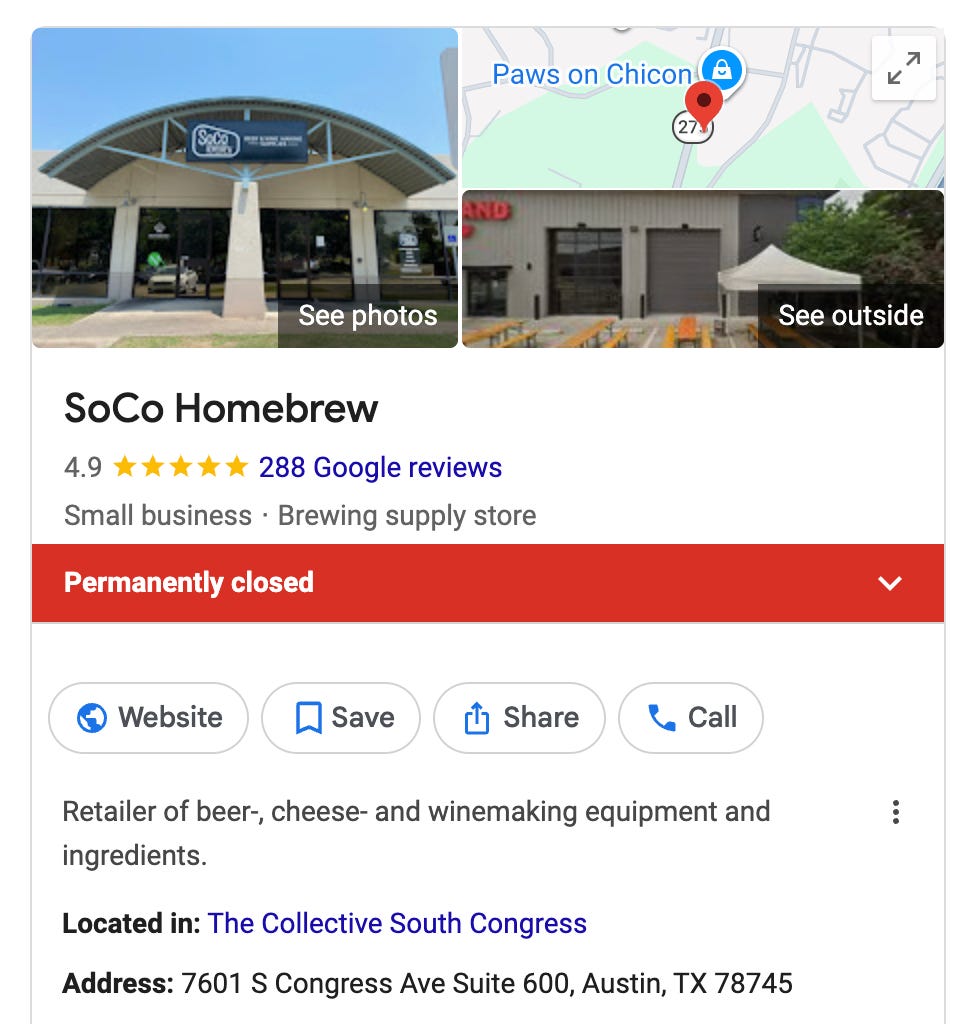
I thought there was an error or glitch. I was just in there. I navigated to their website to see a boilerplate GoDaddy domain for sale. A recent Reddit post on r/AustinBeer was flooded with people who felt similarly to me. One user stated it “feels like the end of an era,” and I agree. This felt like more than just another Austin closure; it felt like a fatal blow to the hobby of homebrewing (as it was Austin’s last dedicated brick-and-mortar homebrew shop). Before SoCo, Austin Homebrew Supply (“AHS”) closed its retail location and continued online. The website still trades on the identity of the Austin store founded in 1991, but AHS is now an e-commerce brand in the portfolio of South Carolina-based J&P Park, with orders fulfilled out of state. The Austin name remains. The Austin store does not. None of these websites can replace what Mike and SoCo gave me in person. In my state of denial, I added the ingredients I would need for this beer to my cart on AHS:
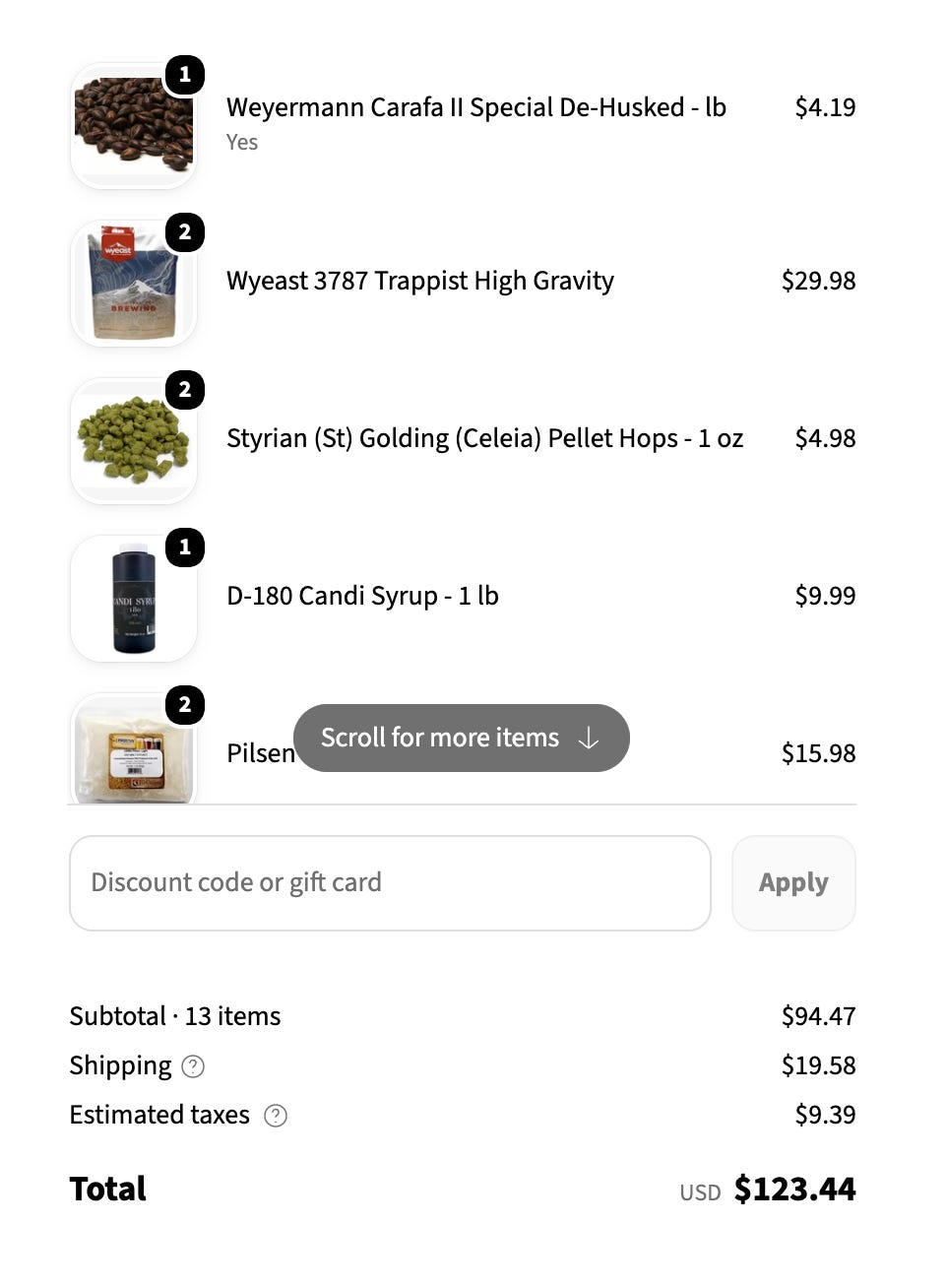
The website did not have some of the ingredients I was thinking of. Who do I ask about substitutions? It is currently 100°F in Austin, so how can I be sure the yeast pack will survive the shipping journey? This is not even to mention the considerable per-ingredient markup and roughly $20 shipping charge. For me, frequent brewing no longer makes economic sense. Sadly, my beer is mostly going to need to come from bars.
Maybe one day, my wife and I will look up from our beers at Sign Bar and see the SoCo Homebrew sign hanging among Austin’s other ghosts. It would be a fitting tribute to the place that taught me to brew.
The Paco’s Tacos sign was already down when I went to say farewell on Friday. I am sure it will soon join the others.
Ju Bru an unfortunate casualty
It’s like losing good friends. :(